Wednesday, February 1, 2012
Meat-Eating Plant Traps Victims Underground
What do killer whales eat in the Arctic?

Killer whales (Orcinus orca) are the top marine predator, wherever they are found, and seem to eat everything from schools of small fish to large baleen whales, over twice their own size. The increase in hunting territories available to killer whales in the Arctic due to climate change and melting sea ice could seriously affect the marine ecosystem balance. New research published in BioMed Central's re-launched open access journal Aquatic Biosystems has combined scientific observations with Canadian Inuit traditional knowledge to determine killer whale behaviour and diet in the Arctic. Orca have been studied extensively in the northeast Pacific ocean, where resident killer whales eat fish, but migrating whales eat marine mammals. Five separate ecotypes in the Antarctic have been identified, each preferring a different type of food, and similar patterns have been found in the Atlantic, tropical Pacific, and Indian oceans. However, little is known about Arctic killer whale prey preference or behaviour.
This is an example of discovery science. This allows humans to know how killer whales acquire their energy.
Steven H Ferguson, Jeff W Higdon and Kristin H Westdal, Aquatic Biosystems. Prey items and predation behavior of killer whales (Orcinus orca) in Nunavut, Canada based on Inuit hunter interviews. Aquatic Biosystems, 2012 (in press)
Tuesday, January 31, 2012
Newly Discovered Carnivorous Jungle Plant Gobbles Rats Whole

Although one would think plants use the sunlight to gain energy using the process of photosynthesis, a newly discovered plant (2009), the Poisonous Jug, is carnivorous and devours its large prey whole. This plant was recently discovered in the mountains of the Philippines. It’s main prey is rats. These rats are lured in by the hope of reaching the nectar that is produced inside the “jug”. Once inside, the rodent is trapped alive, and digestive enzymes break down its flesh, so the plant can use it as energy. This is different than most plants that use the suns light as energy, and are producers, rather than consumers. This discovery is an example of discovery science, since nothing was tested, but instead, discovered. It has no real importance to humans, however it is an interesting find that hopefully will lead to many new discoveries.
Author: Stuart Fox
Title of article: Newly Discovered Carnivorous Jungle Plant Gobbles Rats Whole
Journal: Popular Science
Date published: 08.18.2009
Pages: N/A
How does the Venus flytrap digest flies?
Bacteria Can Live on Caffeine
In May 2011, scientists found a bacterium, Pseudomonas putida CBB5, which could live on caffeine, in a flower bed at the University of Iowa. This bacterium was found to get all of the calories it needed from it caffeine. Caffeine is made up of carbon, hydrogen, nitrogen and oxygen, all necessary for life, which is why this bacterium can sustain itself off of it. Ryan Summers from the University of Iowa, who carried out this research, found that the bacterium has several enzymes that break down the caffeine, specifically the two carbons and nitrogen rings in its core. By breaking down the compound into carbon dioxide and ammonia, it obtains all of the energy it needs to survive. The researchers isolate the genes that they thought made these specific enzymes, and put them into E. Coli for a test. The bacteria produced NdmA and NdmB.
This research is an example of discovery based science because it is based on studies and observations; there was no hypothesis or carrying out of an experiment. This discovery is important because according to the American Society for Microbiology, this could lead to treatments for different diseases, since the byproducts of caffeine breakdown are natural building blocks for drug used to treat asthma, heart arrhythmias, and blood flow.
By: Veronique Greenwood
Title: “Why Bacteria, But Not Humans, Can Live on Caffeine”
Journal: Discover Magazine (online)
Published online: June 14, 2011
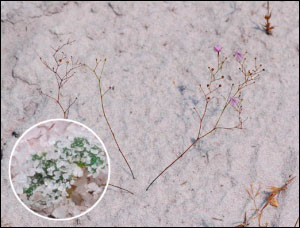
Brazillian Plant Will Eat Your Family......if you are a nematoad
This is an example of hypothesis based science. The researcher hypothesized that the underground leaves eat nematoads in the soil. They tested it, and were correct.
These finding are an example of the bizarre ways plants can absorb nutrients from thier environments.
Source; HT Media
Title; Carnivorous plant eating worms discovered
Date; January 11, 2012
Journal; Techno-Guru
What Do Killer Whales Eat in the Arctic?

Killer whales (Orcinus orca) are the top marine predators in the areas that they inhabit. If you are unfamiliar with killer whales, then you only need to think about SeaWorld and their famous iconic mascot ‘Shamu’. Unfortunately, killer whales are called so for a reason, and are not in fact as friendly as SeaWorld would have you believe. Researchers from Manitoba visited 11 Canadian Nunavut Inuit communities and gathered information on killer whale eating and hunting patters. The Inuit told the researchers that the killer whales ate whatever they could catch, from fish to other marine mammals. Though they admitted to never actually seeing them consume fish, the Inuit speculated that the killer whales did eat them. They said that Killer whales mostly hunted and ate seals (ringed, harp, bearded, and hooded) and whales (narwhal, beluga and bowhead). There are three to five types of killer whales that may just be different enough to warrant labeling them as different species in years to come. Each type has a relatively different diet. The Inuit reported seeing the killer whales hunt, and that they would frequently do so in a pack (similar to wolves). There were several reports of a pack of killer whales trapping a much larger bowhead whale (up to 66 ft; average male killer whale: 20-26 ft.). Some whales held the bowhead’s flippers or tail, while others covered its blowhole. Every once in awhile, dead bowheads with bite marks and internal injuries were found by locals.
Analysis:
The article was an example of discovery science as researchers took in data and figured out a common pattern for killer whales.
The importance it has for people is not actually that great, as it does not affect anyone personally, but it does help people learn more and understand killer whales.
Authors: Steven H Ferguson, Jeff W Higdon and Kristin H Westdal, Aquatic Biosystems.
Title: What Do Killer Whales Eat in the Arctic?
Journal: Science Daily
Published: January 29, 2012
Symbiotic Bacteria Serve as Hydrogen “Fuel Cells” for Deep-Sea Mussels
Scientists at the Max Planck Institute of Marine Microbiology and the German Cluster of Excellence MARUM discovered certain types of mollusks which live in the darkest depths of the ocean utilize hydrogen oxidizing bacteria as a source of fuel. This species of muscle, Bathymodiolus puteoserpentis, lives in symbiosis with sulfur- oxidizing bacteria which uses sulfur or hydrogen as an energy source. These specimens were found in the Logatchvec hydrothermal vent field which has the highest concentration of hydrogen ever documented. The enzyme, hydrogenase, required for oxidizing hydrogen was also discovered in other organisms inhabiting the areas surrounding deep sea vents.
This article is an example of hypothesis based science as the researchers revealed this unique ability while studying and conducting tests on a specimen of mollusk. This research could provide insight on how organisms living in a sunlight- free environment produce the energy required for their existence. Discerning the enzymes and genes which permit an organism’s metabolism to be dependent on hydrogen could pose new inquiries for geneticists, oceanographers, and microbiologist.
Author: Rebecca Boyle
Title: Symbiotic Bacteria Serve as Hydrogen “Fuel Cells” for Deep-Sea Mussels
Journal: Popular Science.com
Date Published: 8/16/2011
